Log Entry 3: Synthesis, Charter & Presentation
Bringing together all learnings into actionable principles and professional presentation.
✉️ 1. Reflection on Giving Peer Feedback
Applying the Emotional Bank Account Concept
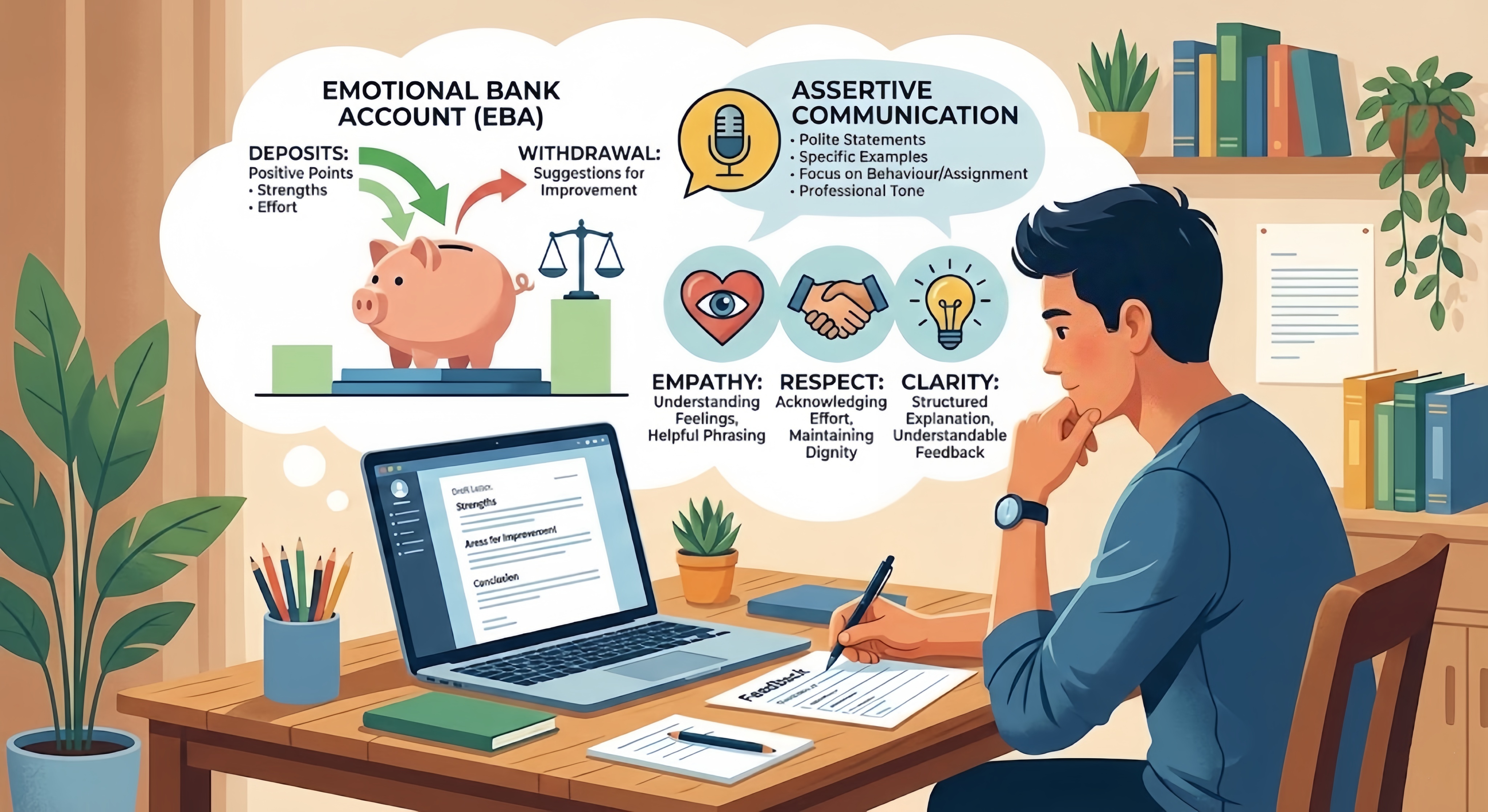
When I wrote my Peer Feedback Letter to my classmate, Wong Coey, I realised that the process was not just about commenting on his work but also about practising the interpersonal theories from this course. I consciously tried to apply the idea of the Emotional Bank Account (EBA) by starting with positive points first, such as his strengths and areas where he had done well. This acted like making "deposits" into the relationship, so that any suggestions for improvement would feel more balanced and respectful rather than like personal attacks.
Practising Assertive Communication
At the same time, I also tried to use a more assertive communication style when giving constructive feedback. Instead of being vague or too indirect, I used polite statements and specific examples to explain which parts of his work could be clearer or more organised. I focused on the behaviour and the assignment, not on his personality, so that the feedback remained professional. However, this was challenging for me because I was afraid that he might feel hurt or offended if I sounded too direct. This fear made me read and edit my sentences carefully to maintain a respectful tone throughout the letter.
Interpersonal Skills in Action: Empathy, Respect, and Clarity
Through this task, I realised that I was actually practising several interpersonal skills at the same time, including empathy, respect, and clarity. Empathy helped me imagine how my classmate might feel reading my comments, so I tried to phrase my feedback in a way that was helpful, not discouraging. Respect guided me to acknowledge his effort and strengths before pointing out weaknesses. Clarity pushed me to express my thoughts in a structured and understandable way, rather than just saying "improve this" without explanation. Overall, writing the feedback letter tested my ability to balance honesty with kindness, and to turn theoretical concepts like EBA and assertiveness into real communication behaviour.
📜 2. My Personal Interpersonal Charter
Introduction to My Charter
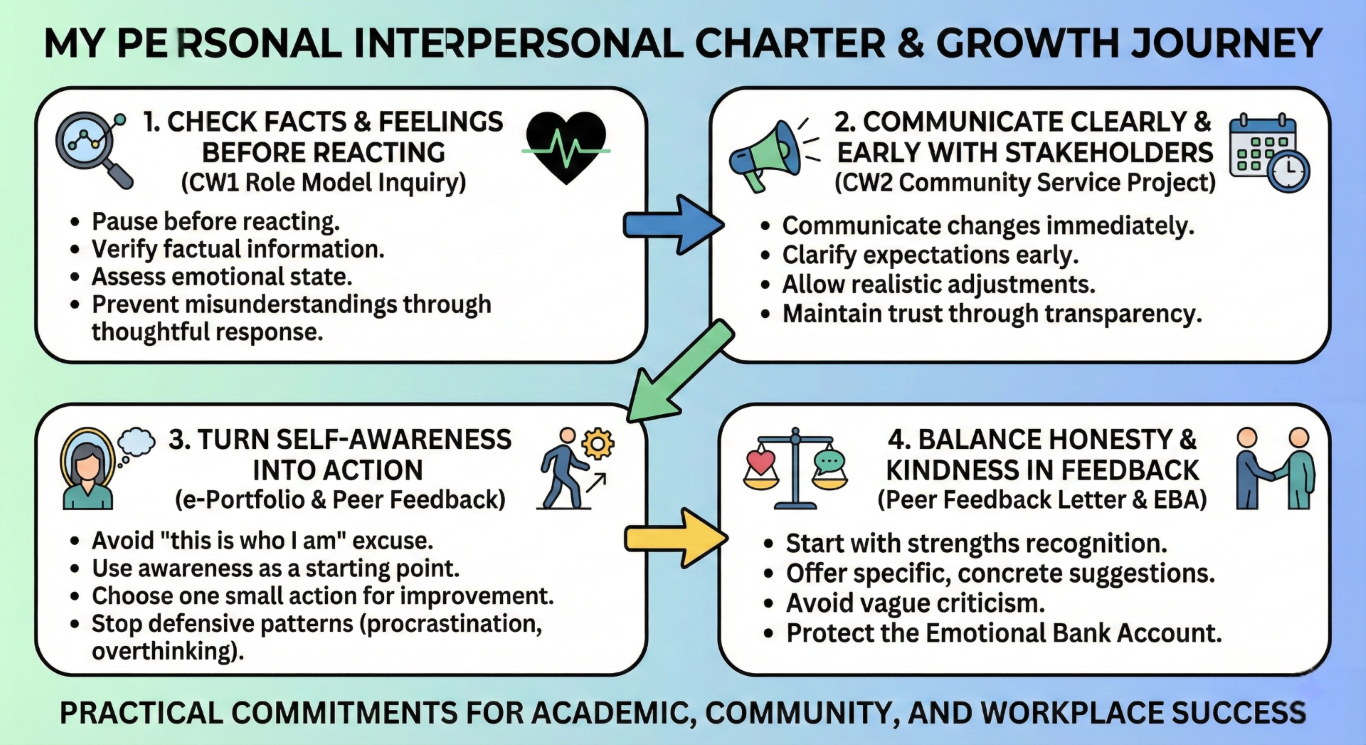
Through CW1, CW2, and this e-Portfolio, I realised that my interpersonal effectiveness depends on how I think, communicate, and respond under pressure. To guide my future behaviour in academic, community, and workplace settings, I have developed the following Personal Interpersonal Charter with four actionable rules. These rules are not abstract ideals but practical commitments that I intend to apply in my daily interactions and professional life.
My Charter Rules:
-
Source: CW1 Role Model Inquiry
Rule 1 – Check facts and feelings before reacting
From the Role Model Inquiry in CW1, I learned that good decision-makers do not rush based only on emotion or assumption. I want to apply this by pausing to check both the factual information and my emotional state before I react, especially in stressful group situations or conflicts. This simple pause can prevent misunderstandings and help me respond more thoughtfully.
-
Source: CW2 Community Service Project
Rule 2 – Communicate clearly and early with stakeholders when plans change
During the Crystal Family Home project, sudden changes from the PIC affected our schedule and created stress, partly because expectations were not fully clarified in advance. This experience taught me to make it a rule to communicate clearly and as early as possible with stakeholders whenever there is a change in plan, so that everyone can adjust realistically and maintain trust.
-
Source: e-Portfolio Reflection & Peer Feedback
Rule 3 – Avoid using "this is who I am" as an excuse; turn self-awareness into action
My peers' feedback made me aware that I sometimes say "this is who I am" and then repeat the same habits such as procrastinating, overthinking, or getting defensive. From now on, I want to treat self-awareness as a starting point for change, not a shield, by actively choosing at least one small action to improve instead of stopping at "I already know my weakness."
-
Source: Peer Feedback Letter & EBA
Rule 4 – Balance honesty and kindness by starting with strengths, then giving clear suggestions
While writing the Peer Feedback Letter, I saw how starting with strengths and then offering specific suggestions can protect the Emotional Bank Account in a relationship. I want to continue practising feedback that is both honest and kind: first recognising what the other person does well, then giving clear, concrete suggestions for improvement instead of vague criticism.
🎬 3. Integrated Scenario – Video Presentation
What You'll See in My Video:
How I apply my Personal Interpersonal Charter to handle a high-pressure stakeholder question during our Crystal Family Home project presentation.
The Crisis Moment:
A stakeholder challenges our safety protocols, and my teammate panics—I'll show you exactly how I respond without blame or hesitation.
Core Strategy in Action:
Combining emotional intelligence (checking facts and feelings first) with structured problem-solving to turn a tense moment into a demonstration of professionalism.
My Charter in Action:
- Check facts & feelings before reacting
- Communicate clearly under pressure
Key Skills Demonstrated:
- Emotional intelligence & calm response
- Problem-solving logic from CW1
- Ethical accountability from CW2
Key Takeaway:
Watch how I transform self-awareness into immediate action—supporting my teammate while maintaining stakeholder trust through clear, respectful communication and ethical accountability.
My Video Presentation:
🎨 4. Digital Etiquette & Digital Grooming – My Design Choices
Colour Palette: Calm, Professional, and Focused
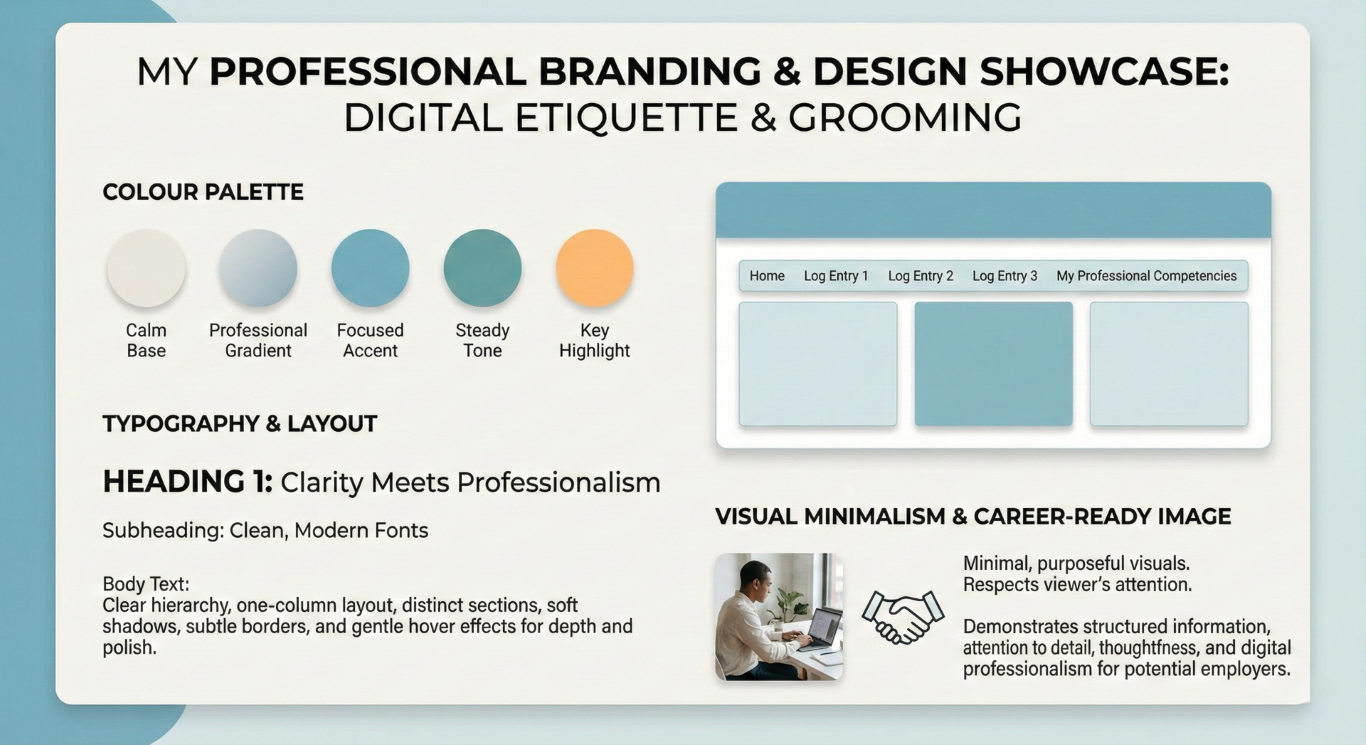
In designing my e-Portfolio, I treated the visual layout as a form of digital grooming and personal branding. I chose a light, neutral background with subtle gradient overlays and blue–teal accents because these colours feel calm, professional, and easy on the eyes. The occasional use of warmer tones and highlights on key words helps important ideas stand out without making the page look cluttered or childish. This colour choice reflects how I want to appear in a professional setting: organised, steady, and focused, but still approachable.
Typography and Layout: Clarity Meets Professionalism
Typography and layout were also deliberate choices to support clarity and professionalism. I use clean, modern fonts with clear hierarchy between headings and body text, paired with a simple one-column layout that separates each log entry and the competencies page into distinct sections. The navigation bar includes five main pages—Home, Log Entry 1, Log Entry 2, Log Entry 3, and My Professional Competencies—so that the lecturer can move easily between content without feeling lost. The use of soft shadows, subtle borders, and gentle hover effects creates a sense of depth and polish, which mirrors the effort I put into refining my reflections and presenting myself carefully online.
Visual Minimalism: Respecting the Viewer's Attention
I kept my use of visuals minimal and purposeful, including only real photos and simple icons that support the content rather than distract from it. This aligns with the idea of digital etiquette from the course, where a professional online presence should respect the viewer's attention and avoid overwhelming them with unnecessary decoration. Overall, the design of this site is my way of showing that I take my personal development seriously: I want my digital appearance—colours, fonts, structure, and interaction—to match the same standard of respect, clarity, and self-awareness that I aim to demonstrate in face-to-face communication.
Career-Ready Image: What Employers Would See
This e-Portfolio is also designed to present a career-ready image to potential employers. The clean, organised layout and consistent typography show that I can structure information clearly and pay attention to detail, which are important skills for any professional role. The calm blue–teal palette and minimal, purposeful use of icons and real photos suggest that I am steady, thoughtful, and respectful of others' time, rather than flashy or careless. If a future employer viewed this site, I would want them to see someone who can communicate ideas in a polished, user-friendly way and who takes both personal growth and digital professionalism seriously.
← Back to Log Entry 2 | Continue to My Professional Competencies →